Live host overview
CPU, memory, disk, network, and alert freshness refresh from the target host so you can see current pressure without opening a laptop.
Nodex
Nodex connects to Linux hosts over SSH and reads health, network state, services, alerts, recent metrics history, and Docker or Podman container status - with tmux workspace persistence.
Capabilities
It is built for fast operational checks from a phone: see what is wrong, confirm trust, inspect logs, and act on the host without adding a collector or relay.
CPU, memory, disk, network, and alert freshness refresh from the target host so you can see current pressure without opening a laptop.
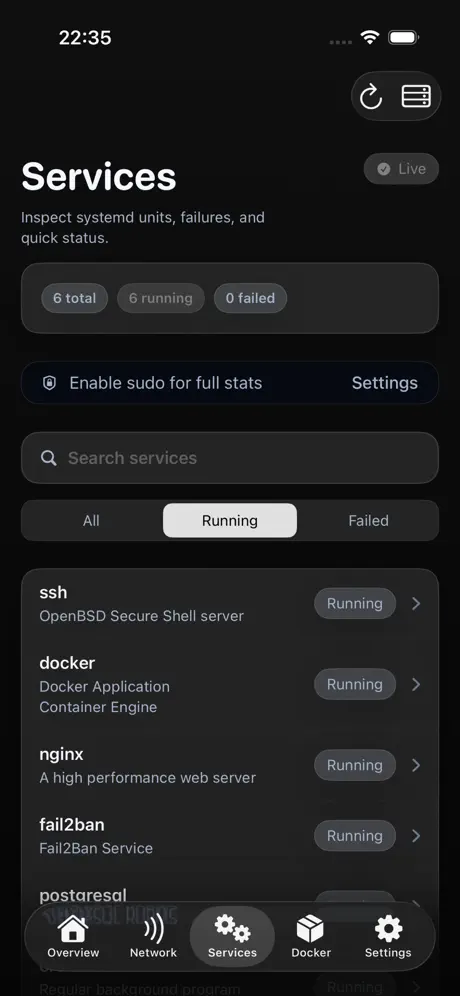
Inspect service state, failures, and journal output from the same place you check live health.
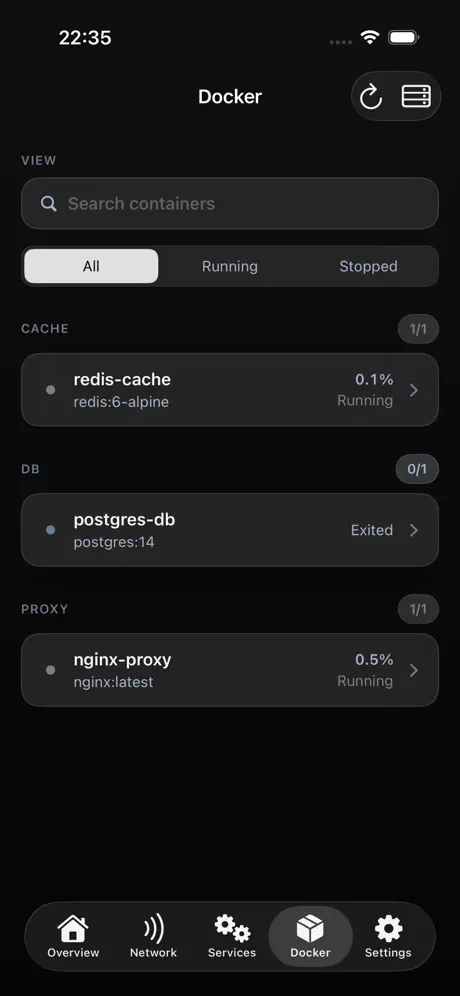
Read container lists, stats, and logs across mixed hosts. Premium unlocks Docker or Podman workspace access and container actions.
Keep recent CPU, memory, disk, and temperature history on device, then export CSV when Premium is enabled.
Reattach to existing tmux sessions across app launches and keep operational workspaces available from the phone.
Nodex reads /proc, systemctl, journalctl, ip, df, sensors, and container CLIs over SSH, with diagnostics, health rules, support bundles, discovery, and anomaly checks.
Privacy
Nodex polls your servers over SSH, keeps trusted hosts and keys on device, and stores recent history locally. Monitoring data is not bounced through a vendor control plane.
Server metrics, logs, container state, command history, and recent history are pulled directly from the SSH hosts you configure and stored locally on your device. Cached data and preferences remain on your device. App Lock can require Face ID, Touch ID, or passcode after backgrounding.
Architecture
Nodex runs as a native iOS client and leans on Linux tools at the source. Health comes from /proc, systemctl, journalctl, ip, df, sensors, and container CLIs instead of a second agent.
The iPhone app handles onboarding, host profiles, dashboards, and the small operational actions needed when you are away from a terminal.
SSH stays on the hot path for collection and action execution, keeping access rules simple and the monitoring flow direct.
Keys, trusted hosts, recent history, and user settings stay on device so the app can keep state without pushing it into a cloud control plane.
The target machine stays authoritative for metrics, logs, services, and containers, so what you see reflects the host rather than a delayed mirror.